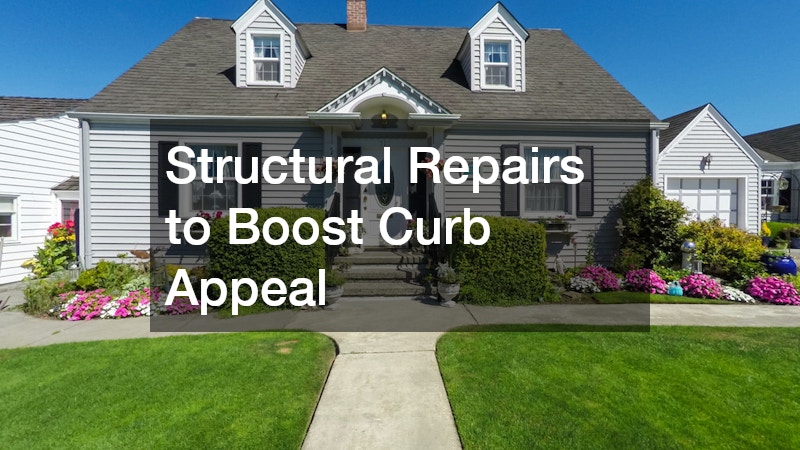
When homeowners think about improving the way their property looks from the street, their minds often drift immediately to superficial upgrades. They envision vibrant flowerbeds, a freshly painted front door, or modern house numbers. While these cosmetic details certainly provide an instant visual lift, they are ultimately surface-level fixes. If a home has a sagging roof, crumbling masonry, cracked walkways, or rotting siding, even the most beautiful landscaping will fail to mask those deeper issues.
True curb appeal is built from the bones of the property outward. Addressing structural and foundational exterior repairs does more than just protect your largest financial asset from moisture and decay; it fundamentally transforms the home’s visual presence. A house that looks structurally sound, crisp, and well-maintained exudes a sense of permanent quality and value that superficial styling can never replicate. By prioritizing deep, structural renovations, you solve long-term maintenance headaches while simultaneously creating a flawless aesthetic.
How to Spot Roof Aging Before It Damages Your Facade
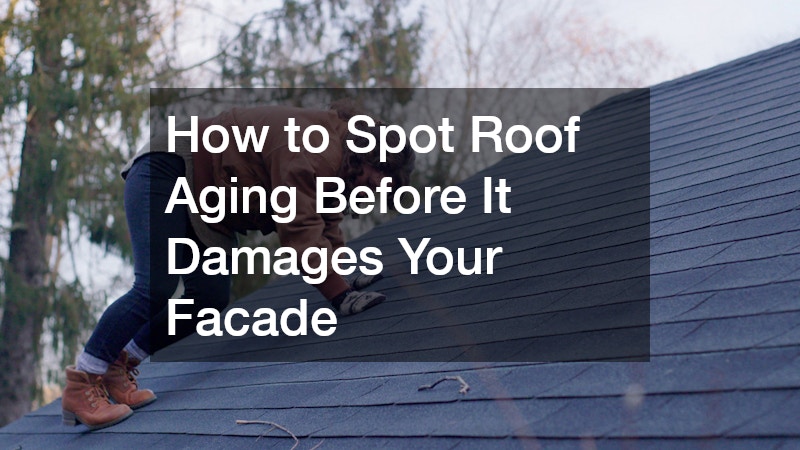
The roofline forms the silhouette of your home against the sky, making it one of the most prominent features of your exterior design. When a roof begins to fail structurally, it does not just threaten the interior ceiling; it actively degrades the property’s exterior aesthetic. To catch these issues before they require catastrophic interventions, homeowners must conduct regular ground-level inspections using a pair of binoculars. Look closely at the planes of the roof for any signs of curling, buckling, or blistering shingles. These distortions indicate that the asphalt substrate is failing, often due to poor attic ventilation, which compromises the architectural crispness of the roofline.
Water management is the other critical half of top-of-the-house structural integrity. A roof can only shed water effectively if the drainage system carries that water safely away from the structure. When gutters sag, pull away from the fascia board, or leak at the seams, the resulting overflow spills directly down the exterior walls. This causes unsightly dark streaks on your siding, rots the wooden trim around windows, and erodes the landscaping and foundation below.
To restore structural integrity and elevate your home’s topmost visual line, consider the following targeted interventions:
- Conduct a thorough check of the flashing around chimneys, dormers, and valleys. Damaged or rusting flashing is a primary source of structural leaks and creates a messy, neglected look.
- Ensure your drainage system has a proper, consistent slope. Ideal drainage requires a downward pitch of one-quarter inch for every ten feet of gutter run toward the downspouts.
- Consider upgrading to seamless aluminum or copper drainage systems. These options eliminate the weak points inherent in sectional gutters and offer a clean, continuous architectural line that frames the roof beautifully.
- When replacing a roof, look beyond the shingles to the underlayment and ventilation systems. Hiring a professional roofing company ensures that the entire system works cohesively to prevent ice dams and premature aging.
- Integrate professional gutter services into your long-term maintenance plan to install heavy-duty hidden hangers, which provide superior structural support compared to old-fashioned spikes and tubes.
Revitalizing the Exterior Shell to Eliminate Rot and Warping
Siding serves as the protective envelope of your home, shielding the framing from wind, rain, and thermal shifts. Over time, wood siding can rot, vinyl can crack or warp from solar heat, and fiber cement can suffer from moisture penetration if left unsealed. When the exterior shell degrades, the home instantly looks dilapidated, signaling to onlookers that the property is suffering from deferred maintenance. Furthermore, structural damage often hides just beneath the surface. Moisture trapped behind compromised siding can rot the structural plywood sheathing, creating soft spots that invite pests and compromise insulation.
To accurately diagnose the health of your exterior shell, use a flat-head screwdriver to gently press against areas near the foundation, around window sills, and at the joints between boards. If the material feels soft or gives way, wood rot has taken hold and structural replacement is required. Once the underlying structural integrity is restored with fresh, durable materials, the focus shifts to preserving those components with a protective, aesthetically flawless finish coat.
Executing a flawless siding overhaul requires a meticulous approach to material selection and surface preparation:
- Remove all rotted or insect-damaged boards entirely rather than attempting to patch them with exterior filler. Patching structural rot only traps moisture underneath, accelerating the decay of the surrounding framing.
- Select modern replacement materials engineered for longevity. Fiber-cement and treated engineered wood composites offer the texture of traditional wood but resist warping, rot, and termites, maintaining their straight lines for decades.
- Adhere strictly to the three-step preparation rule before applying any exterior finishes: thoroughly scrape away all loose material, apply premium exterior-grade caulk to all joints and seams, and apply a high-quality primer to seal the substrate.
- When choosing a color palette, utilize a classic three-color architectural strategy. Allocate sixty percent of the exterior surface to a dominant body color, thirty percent to a secondary trim color, and ten percent to a bold accent color on elements like the front door or shutters.
- For large-scale replacement projects, partnering with experienced siding contractors ensures that moisture barriers and flashing are installed perfectly according to local building codes.
- To achieve an even, durable finish coat that resists UV fading and peeling, employing professional painting contractors can guarantee that the protective layers are applied at the correct mill thickness for maximum lifespan.
Fixing Tripping Hazards and Resurfacing High-Traffic Entryways

The driveway and front walkway act as the red carpet to your home. They guide the visitor’s eye directly to the entrance, making them foundational to your property’s curb appeal. Unfortunately, concrete and asphalt are subjected to immense stress from vehicular weight, shifting subgrades, and aggressive freeze-thaw cycles. When walkways sink, crack, or heave, they stop being welcoming paths and become dangerous tripping hazards and eyesores. Large cracks allow water to seep beneath the slabs, washing away the supporting soil and causing further structural collapse.
Instead of immediately jumping to a costly and disruptive total tear-out, homeowners can often utilize structural preservation techniques to restore these surfaces. For concrete walkways that have sunken unevenly due to soil erosion, slab jacking or polyurethane foam injection offers an elegant structural fix. This process involves drilling small holes into the sunken concrete and injecting a dense material underneath to hydraulically lift the slab back to its original, level position, instantly erasing unsightly uneven lines and hazards.
To revitalize your high-traffic entryways and vehicular paths, focus on these actionable repair methods:
- Clean out hairline cracks in concrete using a wire brush to remove dirt and loose debris, then fill them with a flexible, UV-resistant polymer concrete repair compound to prevent water infiltration.
- Address deep pits or spalling on concrete surfaces by applying a polymer-modified concrete resurfacer over the entire area, giving old concrete a smooth, uniform, light-gray appearance that looks brand new.
- Evaluate asphalt surfaces for fatigue cracking, often referred to as alligator cracking because of its scaly pattern. This indicates a failure of the underlying base layer and requires a deep patch repair rather than a simple topical sealer.
- For asphalt driveways that are structurally sound but faded and micro-cracked, apply a high-grade asphalt emulsion seal coat to restore a deep, rich black finish that contrasts beautifully with your lawn and landscaping.
- To execute complex leveling and structural concrete stabilization, consulting specialized concrete repair services can save thousands of dollars compared to pouring entirely new paths.
- When dealing with extensive asphalt degradation, structural overlays, or complete driveway redesigns, working with certified asphalt contractors ensures the proper compaction and slope required to shed water away from your home’s foundation.
Tuckpointing Mortar Joints and Fixing Cracked Stonework
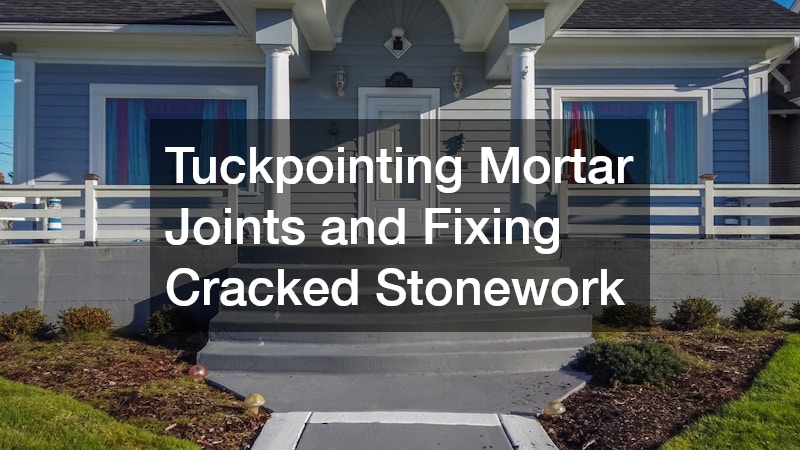
Brick and stone elements lend an air of permanence, historical charm, and structural solidity to a property. However, the mortar joints holding these masonry units together are intentionally softer than the stone or brick itself, meaning they are designed to wear out over time. When mortar begins to crumble, flake, or crack—a condition known as degradation—water enters the wall system. During cold months, this trapped water freezes and expands, causing a destructive process called spalling, where the faces of the bricks or stones pop off entirely, causing severe structural and visual damage.
Restoring these surfaces requires a structural process called tuckpointing. This involves carefully raking out the damaged, loose mortar to a depth of roughly one-half to one inch and packing in fresh mortar. It is vital that the new mortar matches the compressive strength and color of the original material. Using modern, overly hard Portland-based mortar on historic, soft clay bricks will trap stress and cause the bricks to crack under thermal expansion.
Keep your home’s stone and brick elements structurally sound and visually striking by implementing these masonry practices:
- Use the scratch test to evaluate mortar health. Scrape a flat-head screwdriver across the mortar joint; if it crumbles easily into dust, the joint is failing and requires immediate remediation.
- Clean off efflorescence, which is the white, powdery salt residue left behind when moisture evaporates out of masonry. This can be safely removed using a stiff nylon brush and a mild, specialized acidic masonry cleaner.
- Check the structural grading where your masonry elements meet the soil or driveway. The ground must slope away from masonry walls at a rate of six inches over the first ten feet to prevent water from pooling against the brickwork.
- Frame your stone or brick features cleanly by ensuring that adjacent borders, lawns, and garden beds are sharply defined, which highlights the natural textures of the stonework.
- For delicate tuckpointing projects, chimney rebuilds, or structural retaining wall failures, utilizing professional masonry contractors ensures that the structural integrity of the stone or brick is preserved without altering its historic aesthetic.
- When reshaping the approach to your home or blending a brick facade with a new pathway, a skilled driveway contractor can help design a cohesive layout that manages water runoff while accentuating your home’s masonry features.
Upgrading the Focal Point and Stripping Away Decades of Grime
The garage door is often the largest single architectural element visible from the street, sometimes occupying up to one-third of the home’s front facade. A garage door that is dented, fading, out of alignment, or structurally warped instantly drags down the aesthetic value of the entire property, regardless of how well-maintained the rest of the house might be. Beyond the visual detraction, an improperly balanced or poorly sealed door compromises the home’s energy efficiency and structural security. Upgrading to a structurally sound, insulated garage door instantly updates the architectural style of the home, transforming a utilitarian necessity into a major design statement.
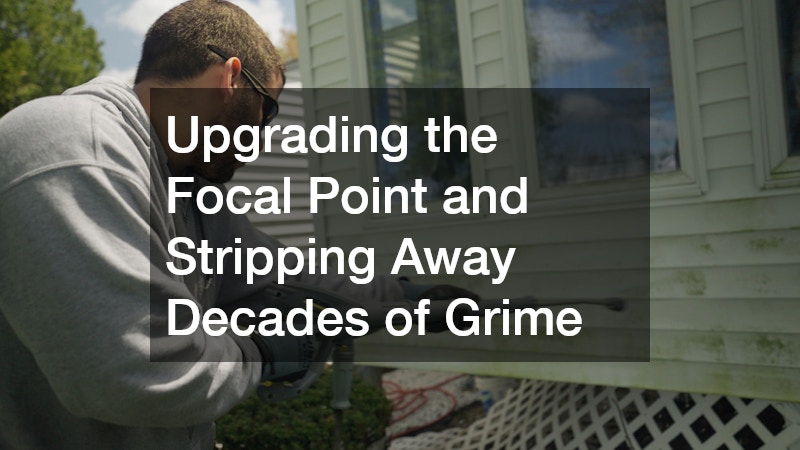
The final structural element of a complete curb appeal transformation involves deep cleaning the accumulated grime, mold, and environmental pollutants from the home’s exterior surfaces. Over the years, atmospheric soot, algae, and mildew root themselves into porous surfaces like concrete, brick, and vinyl siding. This does more than make a house look dark and dingy; these organic organisms actively eat away at paint binders and mortar over time. Stripping away this layer of grime reveals the true colors and crisp lines of your structural repairs.
To complete the transformation of your home’s exterior focal points and surfaces, apply these final touches:
- Choose a garage door style that complements the architecture of your house, such as a carriage-house style for traditional homes or a clean, flush panel design with frosted glass windows for modern properties.
- Verify the mechanical alignment of your garage tracks and replace worn-out weather stripping along the bottom and sides to create an airtight structural seal against the elements.
- When cleaning your home’s exterior, strictly match the water pressure to the material being cleaned to avoid structural damage. Poured concrete can handle high pressures, whereas soft woods, vinyl siding, and historic brick require a low-pressure soft-wash approach.
- Use biodegradable chemical pre-treatments containing surfactants and mild mildewcides to dissolve organic growth at its root structure rather than relying solely on high-pressure water blasting, which can gouge surfaces.
- To ensure a flawless fit, perfect balance, and proper integration with automatic opener safety systems, invest in a professional garage door installation.
- To safely remove decades of stubborn stains and dark discoloration from high peaks and delicate siding materials without causing accidental damage, hiring reputable pressure washing companies is highly recommended.
Elevating your home’s curb appeal is a project that yields the best results when approached from a structural perspective. While temporary cosmetic enhancements offer brief moments of satisfaction, they simply cannot match the transformative power of a deep exterior restoration. By addressing the core elements of your home—ensuring a sound roof and drainage system, renewing the protective siding envelope, leveling high-traffic concrete walkways, restoring classic masonry, and modernizing major focal points—you create an exterior that looks incredibly sharp and stands strong against time. This systematic, top-down investment protects your financial equity, eliminates future maintenance headaches, and creates a proud, beautiful architectural presence that genuinely stands out in the neighborhood.